Put the same position in front of two club players and you can often guess who will find the tactic — not from their rating, but from the order in which they look at the board. Stronger players do not calculate more moves. They calculate fewer, better ones, and they examine the same handful of things in the same sequence every time.
What follows is that sequence. It is not glamorous, and on easy puzzles it feels slower than guessing. On anything with a bit of depth, it is the difference between a lucky hit and a method you can rely on.
Forcing moves are checks, captures and direct threats — in that order. A check forces a reply. A capture forces a decision. A threat demands that the opponent react or lose material. Every other move gives them freedom, and freedom makes the tree of variations explode.
Scan the position once and list every check available to you, including the ones that look ridiculous. A check that obviously hangs your queen is not a candidate, but naming it stops you from half-seeing it later and wondering whether you missed something. Then run through captures, starting with those between pieces of unequal value, followed by any that open a line towards the king. Finally, threats: mate threats, forks, pins, discovered attacks.
In a puzzle, the first forcing move you find is often bait. It works in the line you can see and fails in the line you have not looked at yet. Note it, put it aside, and keep looking. The winning move usually needs one more step of preparation.
Three candidates is plenty. Five is the maximum. Beyond that you are collecting ideas rather than calculating them, and you will run out of time or patience before you finish any of them.
Before calculating, ask what each candidate actually achieves. If it does not touch a weakness, it is probably not the solution. The weaknesses worth checking first are:
Now compare your candidates against that list. Usually one of them attacks something specific and the others merely look active. That is your calculation.
Most club players see the first move or two accurately and then guess. The practical fix is to play the sequence in your head and, before committing, describe the resulting position to yourself in words: "Their king is on g8, rook on f8, my knight has landed on e6, their bishop is still on c8 and their queen is doing nothing."
Two useful things happen. Mistakes surface the moment you try to say them out loud. And you notice details you would otherwise skim past — a piece that is now hanging, a square that is no longer defended, a pawn that can no longer move.
Do this after every move of the line, not only at the end. It feels painfully slow for a fortnight and then it does not. It is also the single best way to stop moving a piece to a square it left three moves ago, which is the most common cause of "I had the right idea but the wrong move".
Train it away from puzzles too. Set a position up on a real board or a screen and solve it entirely in your head, writing down only the final line. Five focused minutes of that a day builds more practical strength than an hour of clicking through puzzles with instant feedback and an undo button.
After each candidate move, find the opponent's best reply before you look at your own next move. This defensive check is what separates puzzles you genuinely solve from puzzles you think you solved.
In a well-constructed puzzle, most of the opponent's replies are forced — that is what makes the solution unique. Verify that instead of assuming it. If your line only works when the opponent chooses a particular defence, you have found a variation, not a solution. Good puzzle-setters test the strongest defence, and it is usually the one that refuses the sacrifice rather than accepts it.
That last point matters more than the rest. The goal is not to get puzzles right; it is to make the routine automatic, so that under time pressure in a real game you do not have to remember it. Ten minutes a day, solved slowly and reviewed honestly, will do more for your tactics than an hour of rushed clicking.
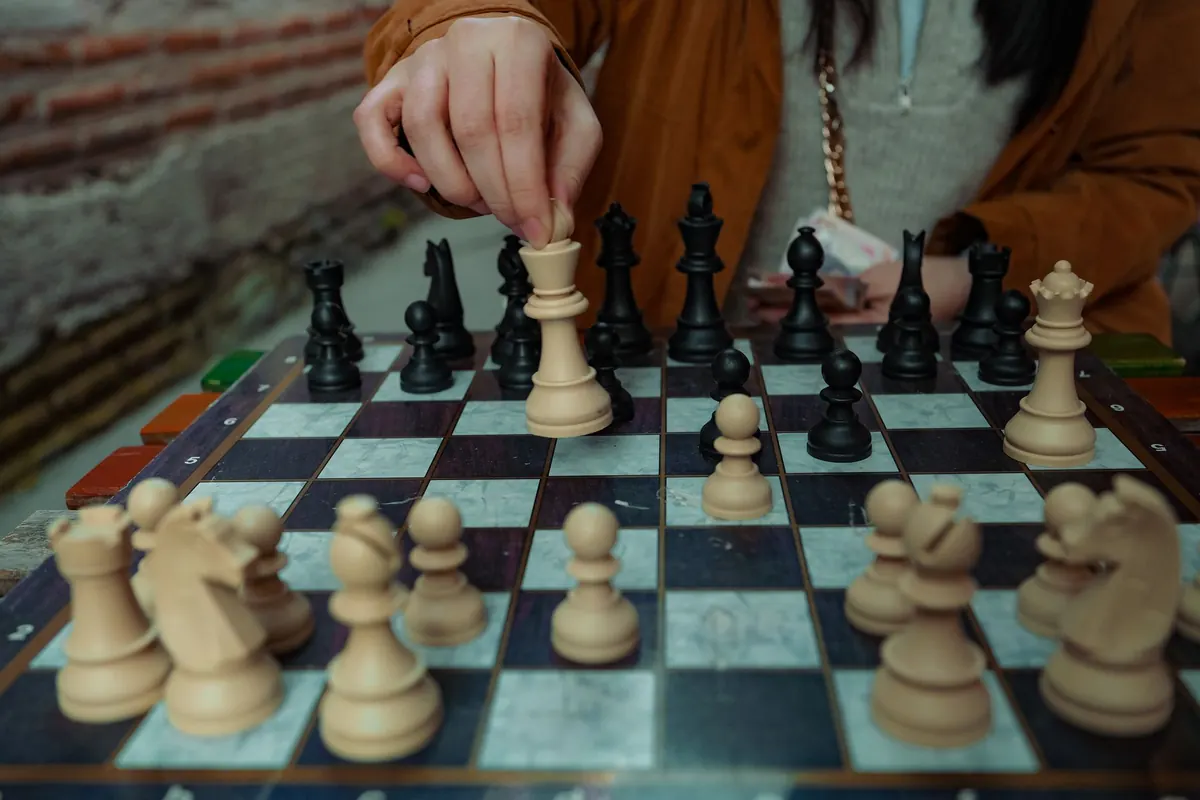
Photo: Tuğçe Açıkyürek / Pexels